There is a particular fatigue that no amount of caffeine can quite disguise—the kind that lingers behind the eyes, that turns mornings into negotiations and nights into restless, scrolling marathons. In an era defined by optimisation—sleep trackers, magnesium blends, circadian lighting—wellness has become both hyper-specific and, paradoxically, overwhelming.
READ MORE: Why Ginger Should Be a Staple in Your Wellness Routine
Which is precisely why the rise of dark showering feels so compelling. No supplements. No devices. No algorithmic dependency. Just the deliberate removal of one thing: light.
The Allure of Less
Emerging somewhere between the internet’s fixation on “sleepy girl” rituals and a broader return to sensory minimalism, dark showering has found its audience among the chronically overstimulated. Its premise is disarmingly simple: step into your evening shower, switch off the lights, and allow darkness to recalibrate the body.
It is less about the act itself and more about what it removes. The glare of overhead LEDs. The sharpness of mirror lighting. The quiet but insistent signals to your brain that the day is still very much in motion.
A Ritual Rooted in Physiology
Unlike the brisk, purposeful morning rinse—designed to awaken and prepare—an evening shower operates differently. Timed roughly 60 to 90 minutes before bed, it becomes an exercise in deceleration.
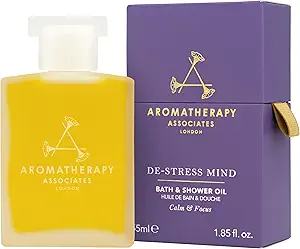
Aromatherapy Associates De-Stress Mind Bath and Shower Oil, Natural Body Oil to Calm Mind, Body and Spirit
The science is elegantly straightforward. Light exposure, particularly in the hours before sleep, suppresses melatonin—the hormone responsible for signalling that it is time to rest. Bright bathrooms, often the most illuminated spaces in the home, inadvertently work against this process.
Remove the light, and the equation shifts.
Darkness reduces sensory input, allowing the brain to downregulate. Vision, after all, is one of the body’s most resource-intensive processes. Strip it away, and cognitive load softens. The mind doesn’t so much switch off as it has less to contend with.
Temperature, too, plays its part. Warm water—ideally around 40–42°C—raises skin temperature and encourages heat dissipation once you step out. This drop in core body temperature is one of the body’s most reliable cues for sleep initiation. It’s not indulgence; it’s biology.
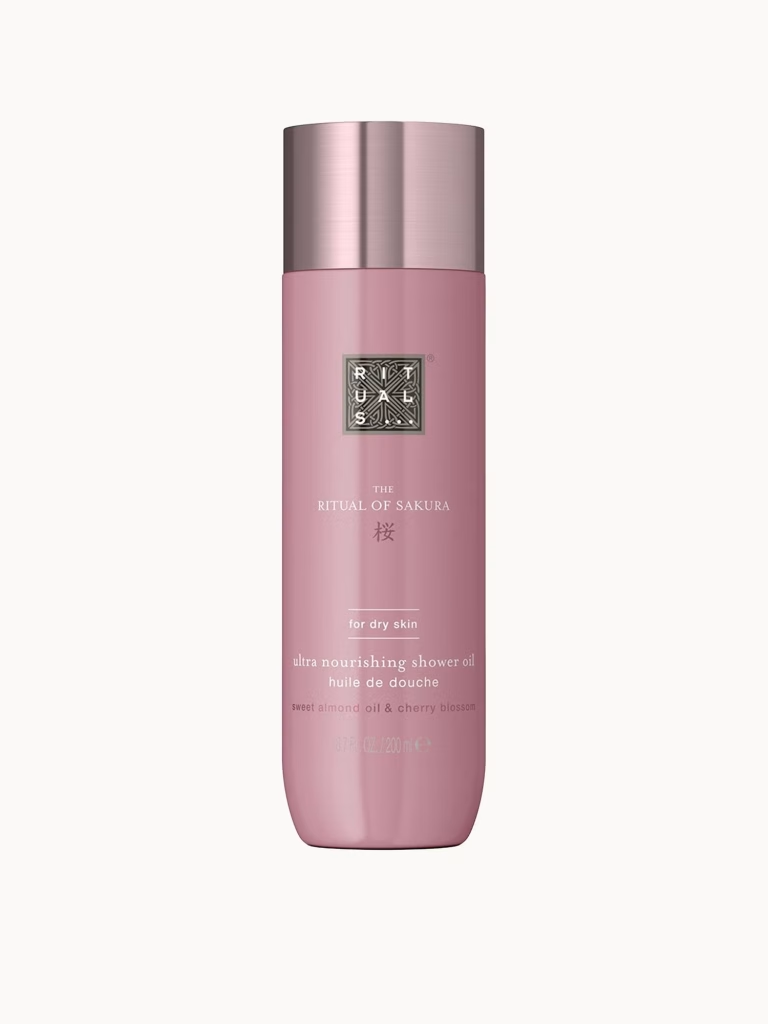
RITUALS The Ritual of Sakura Cherry Blossom & Sweet Almond Oil Shower Oil 200ml
The Experience, Reframed
At first encounter, the practice can feel faintly unfamiliar—darkness has a way of heightening awareness before it soothes it. But as your eyes adjust, something shifts.
Without the visual noise, other senses quietly take precedence: the rhythm of water against tile, the warmth settling into skin, the gradual unwinding of thoughts that, moments earlier, felt immovable. It is less spa-like indulgence, more sensory subtraction.
There are, of course, practicalities. Muscle memory replaces sight—bottles must be positioned with intention, movements slowed. And stepping back into a brightly lit room afterwards can feel almost jarring, a reminder of just how forceful artificial light can be.
Does It Actually Work?
The answer is both yes—and not quite in the way you might expect.
Dark showering is not a miracle cure for insomnia, nor a shortcut to perfect sleep. It does not “hack” the nervous system or activate some hidden biological switch. Instead, it aligns your environment with what your body is already trying to do: wind down.
The effects, when they come, tend to be subtle but noticeable. A slight ease in falling asleep. A quieter mind. A gentler transition between wakefulness and rest.
For more persistent sleep challenges, more immersive interventions—like full sensory deprivation experiences—may offer deeper impact. But that, perhaps, is the point. Dark showering isn’t about transformation; it’s about refinement.
The New Minimalism of Rest
In a culture that often equates wellness with addition—more steps, more products, more optimisation—dark showering offers a rare inversion. It asks what might happen if, instead, you removed something.
Not everything needs to be engineered. Some things simply need to be dimmed.