Seven years is a lifetime in modern celebrity. Enough time for identities to shift, allegiances to fracture, and public narratives to calcify in ways no one could have anticipated at the beginning.
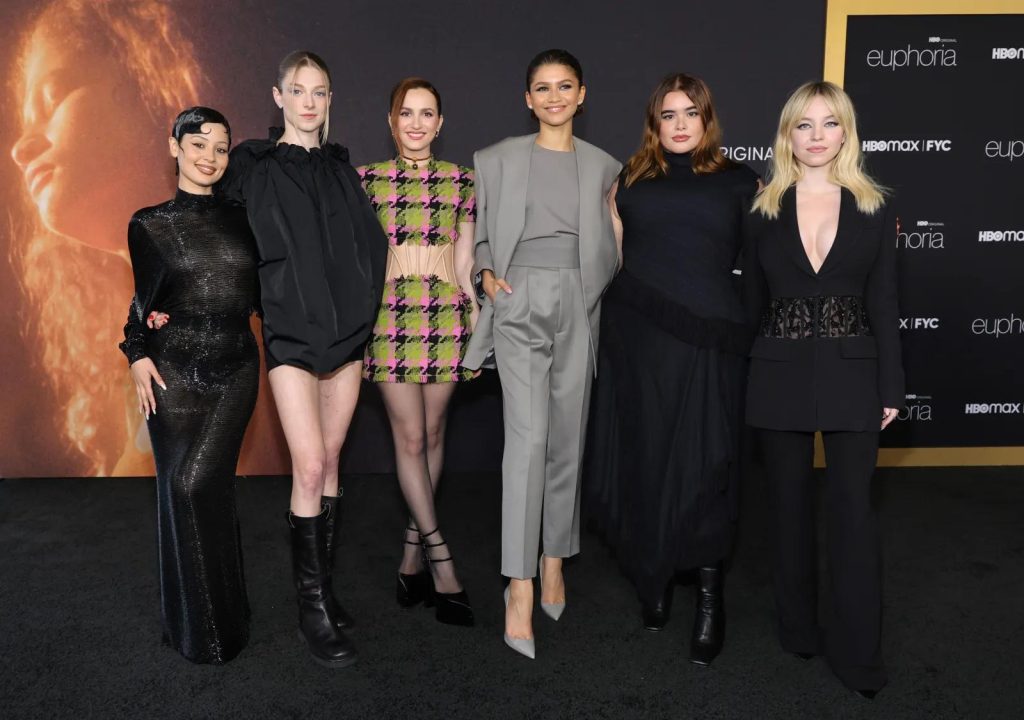
At the season three premiere of Euphoria, that passage of time was not merely evident—it was palpable. Zendaya, Jacob Elordi, Sydney Sweeney, and Alexa Demie returned to the same carpet that once marked their collective ascent. But the energy had shifted. What once felt like ignition now read as conclusion.
Fame, accelerated to its most intense form, had done its work.
The Weight of What Happened in Between
The journey to this premiere was anything but linear. Production delays, industry-wide disruption during the SAG-AFTRA strikes, and the loss of Angus Cloud cast a long shadow. Add to that Eric Dane’s ALS diagnosis and ongoing creative recalibrations from Sam Levinson, and the result was a season that very nearly didn’t exist.
By the time cameras resumed, the cast had evolved into something far larger than the show that first defined them—busier, more visible, and, perhaps, less tethered to its original gravitational pull.
Which may explain the atmosphere that followed.
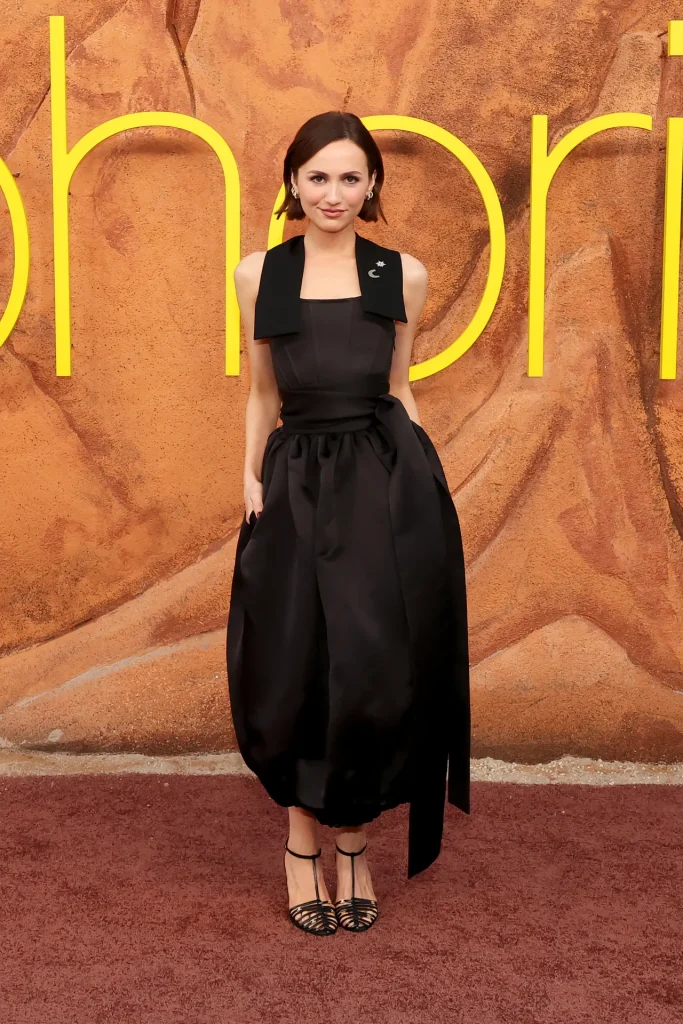
On paper, the fashion delivered. Hunter Schafer appeared in Roberto Cavalli, Maude Apatow in Celine, while Sweeney and Demie leaned into archival glamour—2007 Pierre Cardin and 1991 Bob Mackie, respectively.
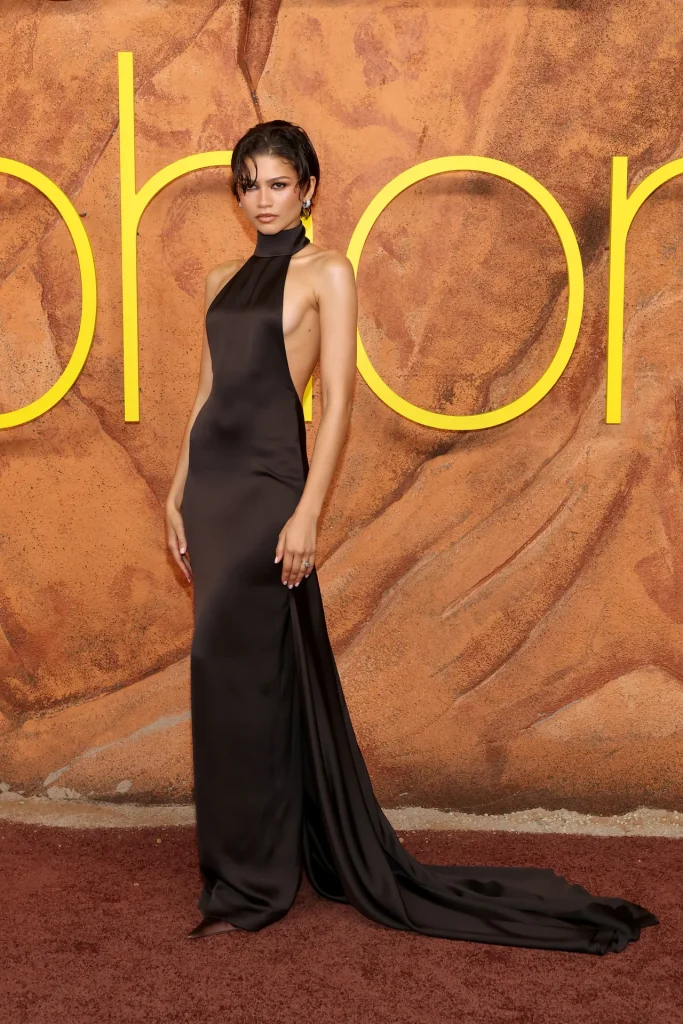
Zendaya, as ever, operated on a plane of her own, choosing a stark halter-neck gown by Ashi Studio—sculptural, controlled, and almost severe in its minimalism. She posed alone, then departed. Efficient. Intentional.
Elordi, dressed in Bottega Veneta, kept his sunglasses on throughout—a small but telling gesture. Where once there was playfulness, there was now distance. Composure. A kind of deliberate opacity.
Even in their clothes, the shift was visible. Less experimentation, more authorship. Less discovery, more definition.
The Absence of Togetherness
Perhaps the most striking detail was not what appeared—but what didn’t.
Group photos, once abundant, were noticeably scarce. The easy camaraderie of 2019—when the cast arrived as a unit, buoyed by shared momentum—had given way to something more fragmented. Individuals, rather than ensemble.
It would be easy to read this as detachment. But it may be something more nuanced: evolution. Careers have expanded. Identities have solidified. The need—or desire—to present as a collective has diminished.
Fame, after all, is rarely a shared experience for long.
What Time Reveals
Looking back at the 2019 premiere, the contrast is almost cinematic. A younger Zendaya in a playful Nina Ricci mini. Demie in a provocative Aknvas gown. Schafer in lace and combat boots. Sweeney in Miu Miu—a relationship that would later define, and then complicate, her fashion trajectory. There was experimentation. Energy. A sense of becoming.
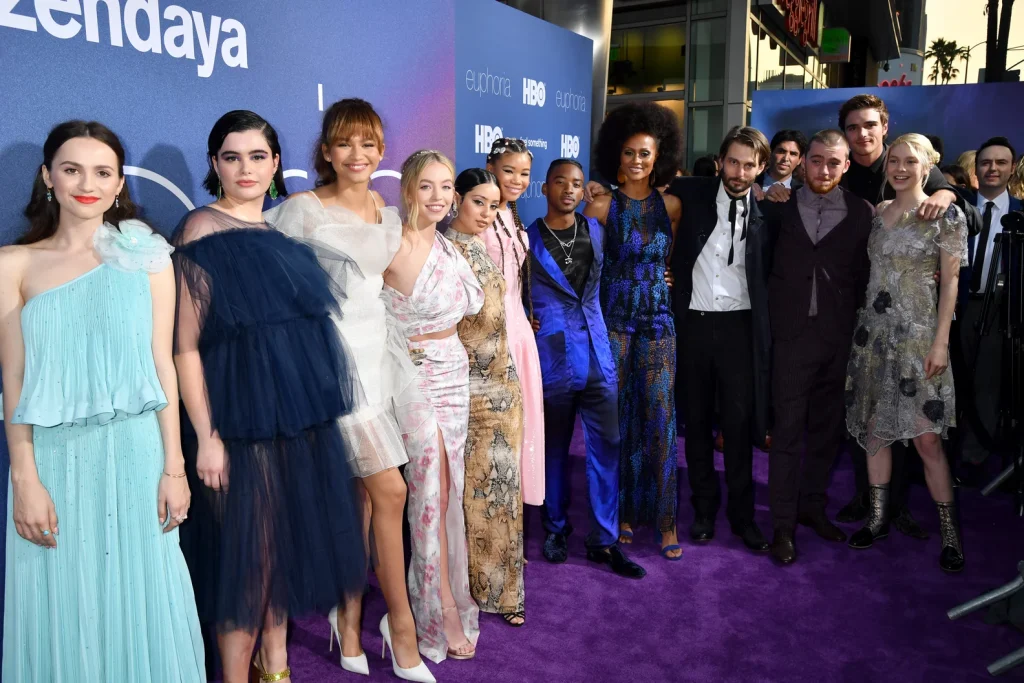
Seven years later, that sense has been replaced by something quieter, heavier. Not diminished—but refined. Tempered by scrutiny, success, and the relentless acceleration of public life.
Which, in many ways, mirrors Euphoria itself. A story never really about excess, but about consequence.
The Final Frame
“It’s been a wild ride,” Sweeney remarked on the night. And perhaps that is the only summary that matters.
Because what this red carpet ultimately revealed was not just how much has changed—but how visible that change has become. In posture. In styling. In presence.
Seven years ago, they arrived as possibility. Now, they arrive as proof.
Maude Apatow in Celine.
Hunter Schafer in Roberto Cavalli.
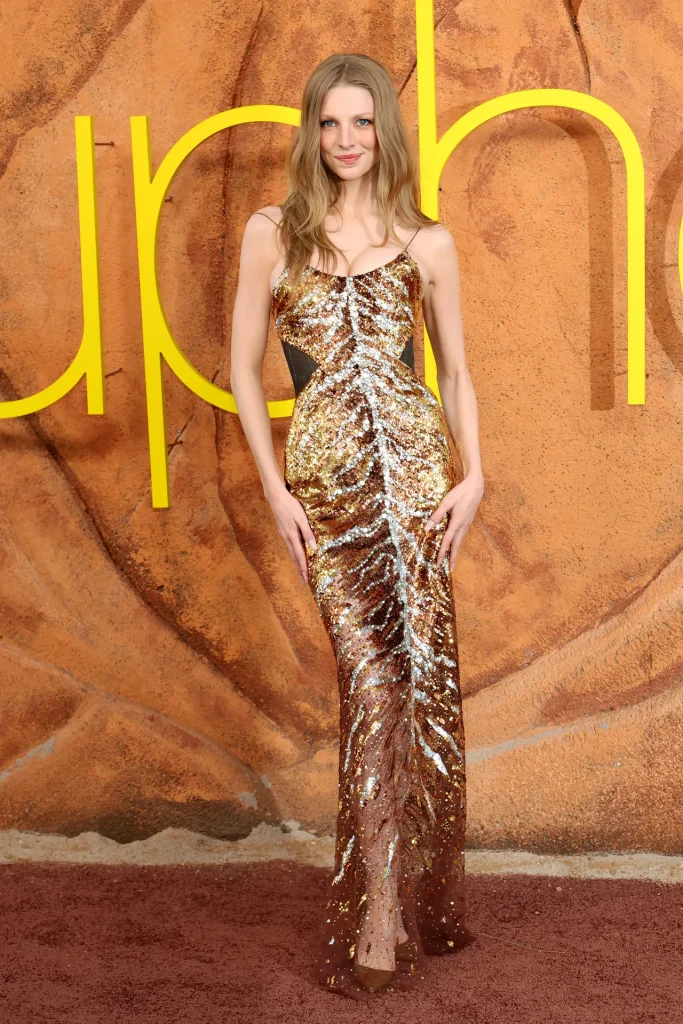
Alexa Demie in Bob Mackie.
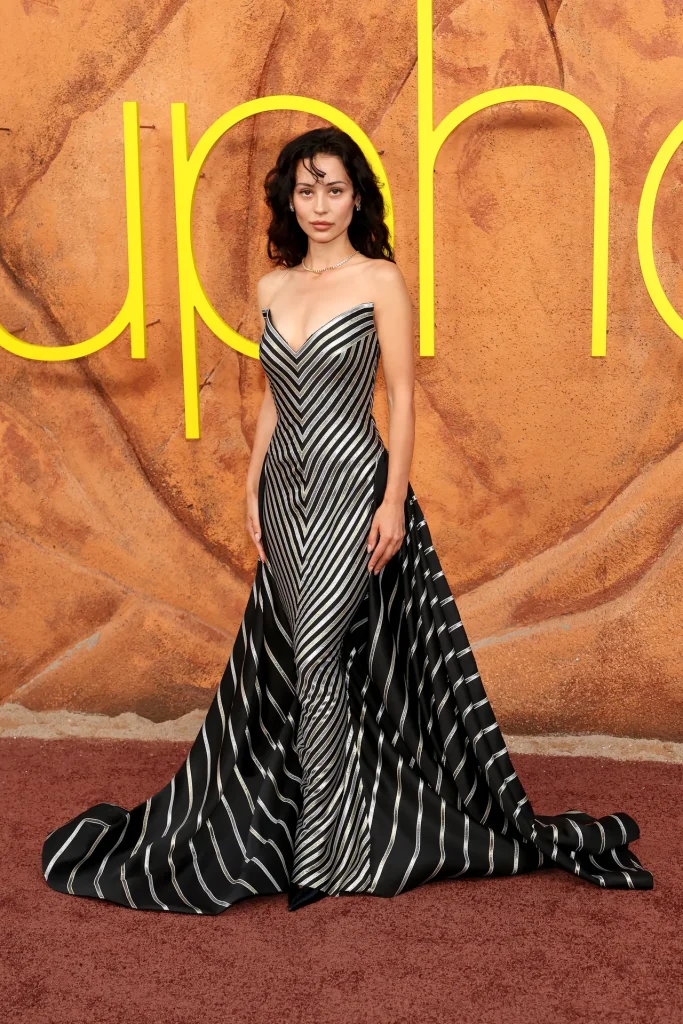
Jacob Elordi in Bottega Veneta.
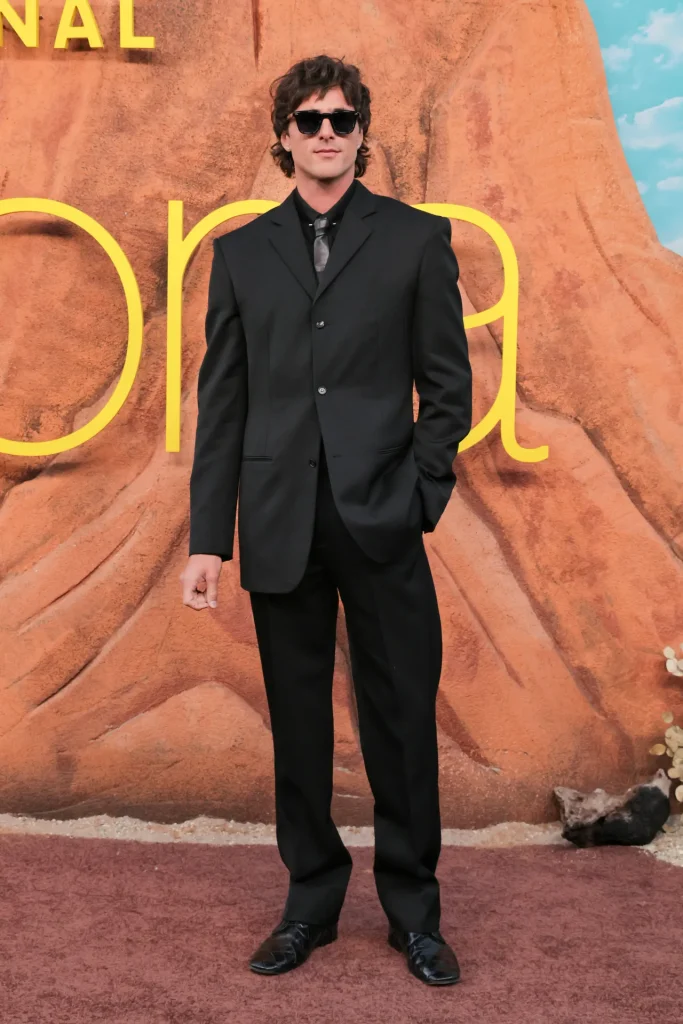
Sydney Sweeney in Pierre Cardin.
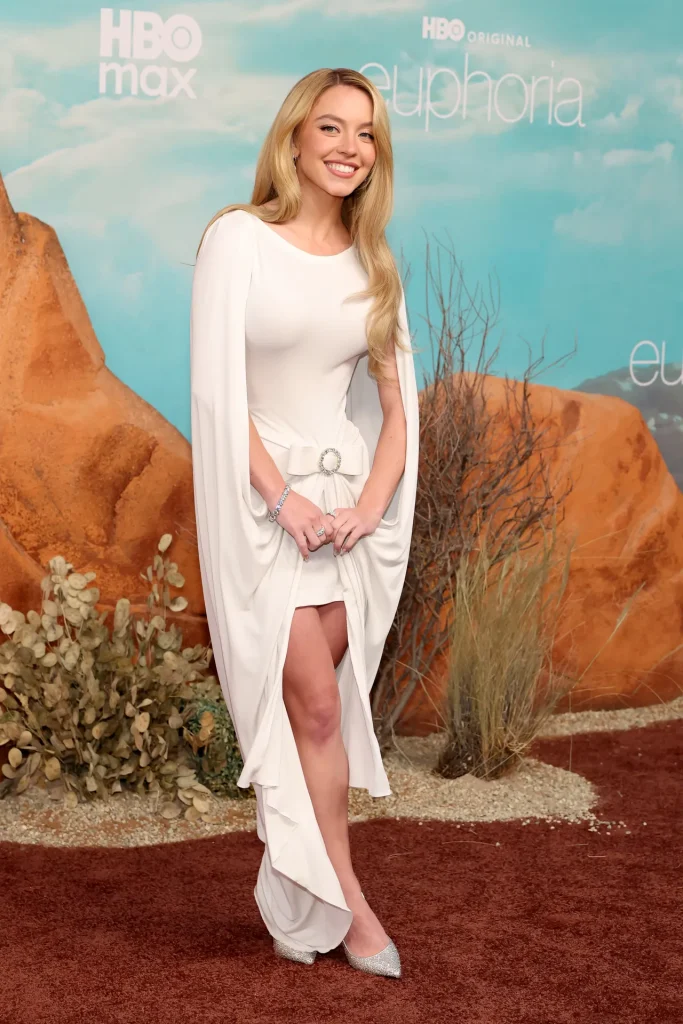
Zendaya in Ashi Studio.