There are moments when fashion stops performing and begins to declare—and fresh from her triumphant night at the MOBO Awards 2026, Ayra Starr delivers exactly that. On a quiet stretch of city concrete, where brick and shadow conspire into something cinematic, the Little Black Dress finds its sharpest evolution yet.
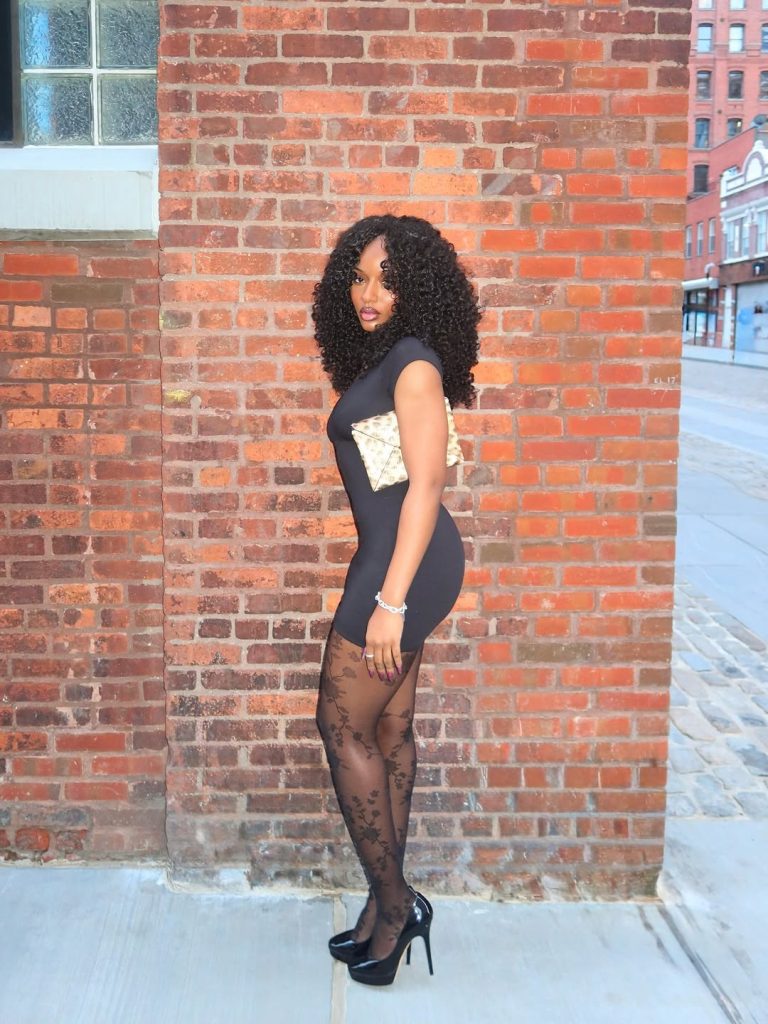
This is not the polite, archival LBD of Audrey Hepburn mythology. This is something far more deliberate—cut close, sleeveless, sculpted with a precision that feels almost surgical. It doesn’t drape; it defines. The hemline lingers in that exacting space between restraint and provocation, a study in tension that mirrors Starr’s own rising dominance.
But it is in the styling that the narrative deepens. The printed tight—once dismissed, now essential—becomes a language of its own. A fine, almost baroque motif traces the leg with poetic insistence, softening the austerity of black with something more intimate, more knowing. It is less accessory, more annotation: a visual footnote that hints at complexity beneath the surface.
Grounding it all, a pair of vertiginous platform pumps in lacquered black. They do not suggest height—they insist on it. There is no fragility here, no tentative step. Starr doesn’t walk; she arrives. The silhouette is elongated, commanding, entirely self-possessed.
The rest is restraint at its most intelligent. A metallic clutch flickers like captured light. Jewelry murmurs rather than competes. And her hair—full, textured, resolutely undone—refuses the rigidity of perfection, framing the look with something instinctive, almost primal.
If the original femme fatale was written in shadow and suggestion, Ayra Starr’s version is authored in clarity. There is no performance for the gaze—male, female, or otherwise. This is dressing for authorship, for ownership, for the quiet certainty of being seen exactly as intended.
The Little Black Dress, it seems, has not only returned. In the hands of Ayra Starr, it has been rewritten—sharper, smarter, and entirely on her own ter