The reality star and entrepreneur channels Studio 54 glamour with a Nigerian twist, proving that more is always more
There are women who enter rooms and women who arrive, and Chioma Goodhair has built an empire understanding the distinction. In these images, the Real Housewives of Lagos star and beauty entrepreneur demonstrates her signature alchemy: the transformation of excess into elegance, of spectacle into sophistication. This is not merely an outfit; it is a declaration of presence, a masterclass in the architecture of attention.
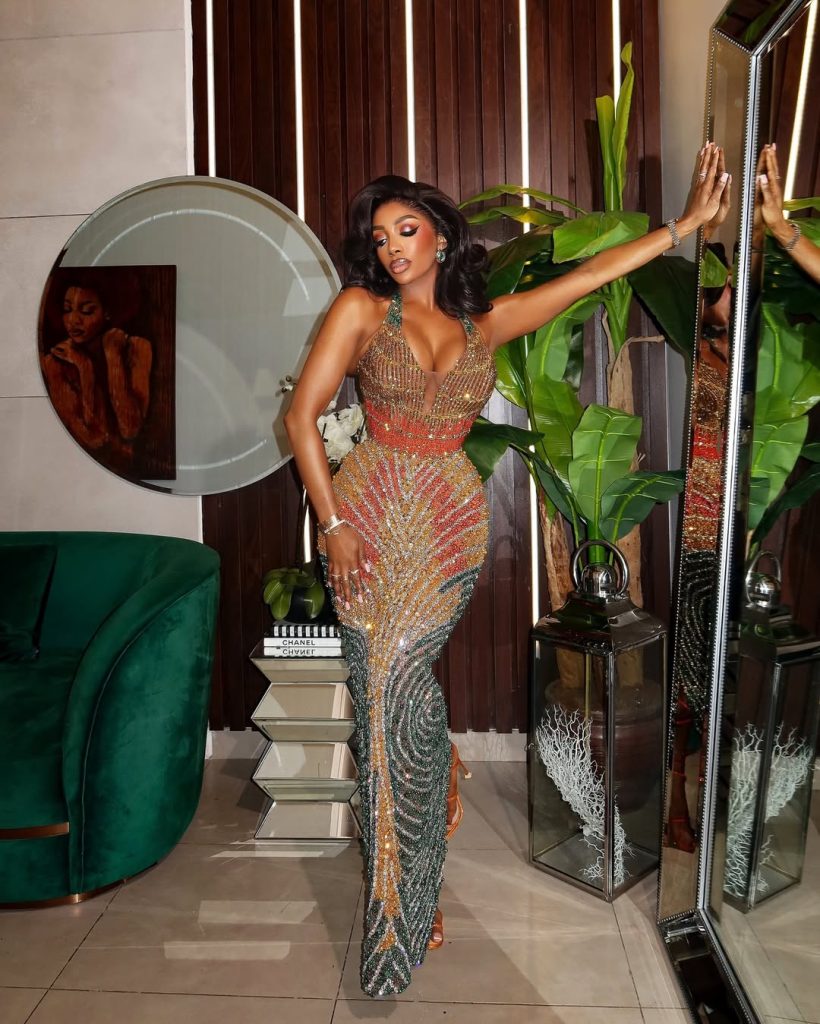
The gown—if such a modest word can contain this construction—operates as a mosaic of light and movement. Every inch of its surface is activated by beadwork, sequins, and crystal that catch illumination from every angle, creating a kinetic quality that suggests the garment is never quite still, even when its wearer pauses. The color story moves with deliberate narrative intent: gold at the bodice, suggesting wealth and warmth; coral and amber at the waist, evoking sunset and transition; emerald and forest green descending toward the floor, grounding the composition in earth and abundance. This is not random decoration but chromatic storytelling, the colors of Nigerian royalty filtered through the lens of contemporary glamour.
The silhouette demands its own vocabulary. A halter neckline plunges with controlled audacity, the straps widening as they ascend toward the neck, creating geometric tension against the bare shoulders. The bodice clings with the precision of couture corsetry, each bead placed to emphasize curve and contour, while the waist cinches to proportions that reference both Victorian fetishism and the exaggerated elegance of Nollywood cinema. Below, the skirt extends into a column of shimmering density, hugging the hips before releasing into a slight flare at the ankle, allowing for movement while maintaining the vertical thrust that elongates the figure.
What distinguishes this look from mere red-carpet formula is the textural complexity. The beadwork does not sit flat against the fabric but rises in dimensional waves, creating topography that invites touch even as it repels it with its obvious delicacy. Swirling patterns suggest both natural phenomena—water currents, wind erosion, geological strata—and the deliberate artistry of traditional African textile techniques. This is Ankara logic applied to eveningwear, the philosophy that pattern should communicate, that surface should tell stories.
Chioma’s styling choices demonstrate the restraint that amplifies excess. The hair—voluminous, waved, cascading past her shoulders in a dark waterfall—references the glamour icons of the 1970s, the Diana Ross and Donna Summer aesthetic of Studio 54’s golden age. The makeup operates in warm harmonies: bronze and gold on the eyes, a coral glow on the cheeks, a nude lip that allows the dress to remain protagonist. Jewelry arrives in delicate punctuation—diamond studs, a tennis bracelet, rings that catch light without competing with the gown’s own radiance. She understands that when the dress speaks this loudly, accessories must whisper.
The setting completes the narrative. In one frame, she stands against a mirror, her reflection doubling the visual impact, the emerald velvet sofa behind her echoing the green tones in her skirt while providing the textural contrast of matte against shine. In the other, she reclines with the casual authority of someone who has never known discomfort in luxury, her body angled to display the gown’s construction while her expression suggests she has already moved on to the next grand entrance. The Chanel books stacked nearby, the architectural mirror, the curated greenery—all suggest a life lived in aesthetic intentionality, where environment and inhabitant exist in continuous conversation.
This is Chioma Goodhair’s particular gift: the ability to embody opulence without apology, to wear the labor of countless hours of beadwork as if it were effortless, to remind viewers that glamour is not frivolity but strategy, not decoration but declaration. In an era of quiet luxury and whispered wealth, she chooses the bold statement, the unforgettable impression, the entrance that stops conversation rather than joining it. The dress will be remembered, photographed, referenced—but it is the woman inside it who understands that true style is not about the garment, but about the authority with which it is worn.