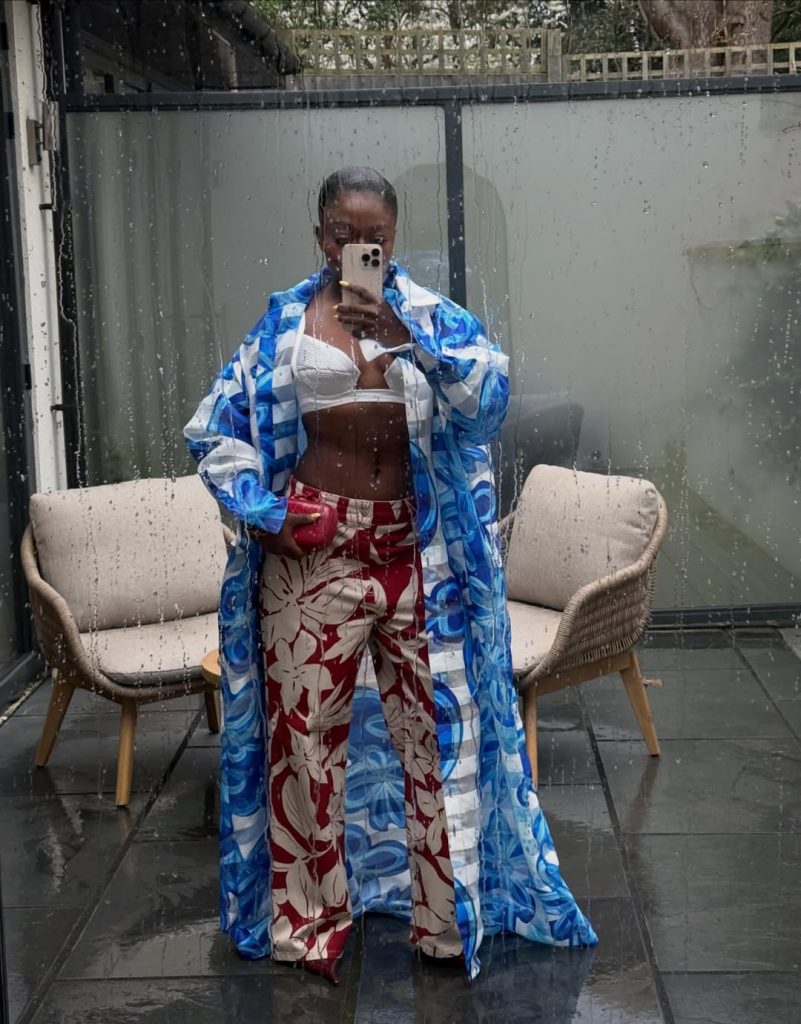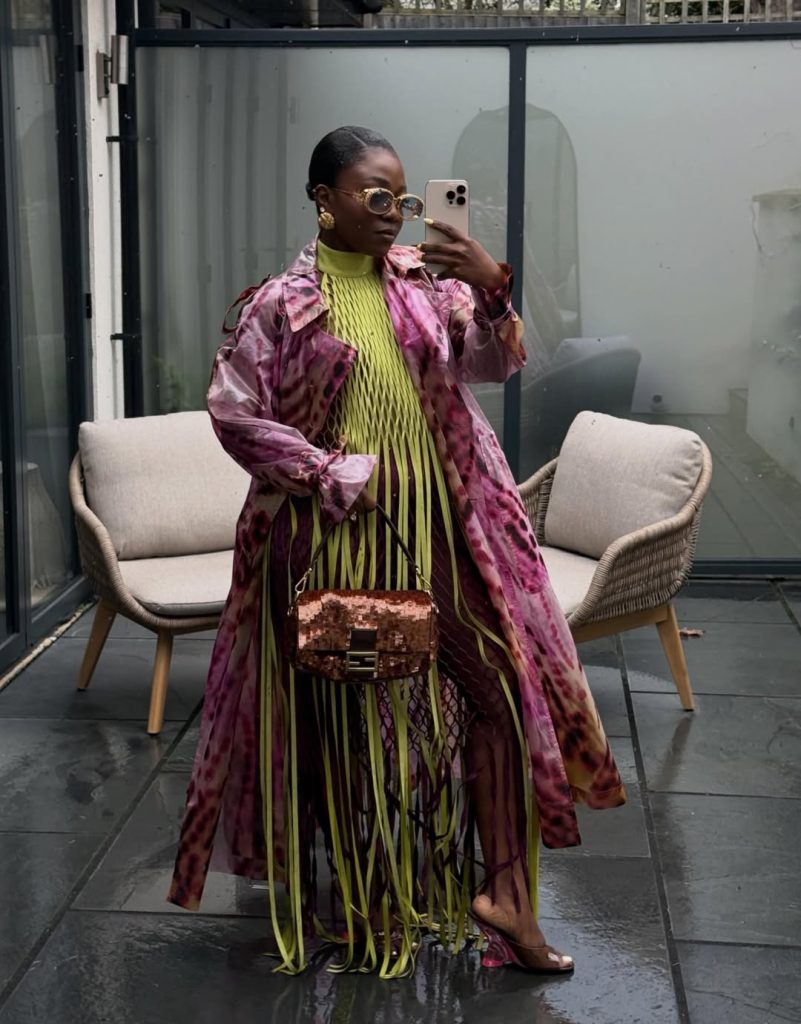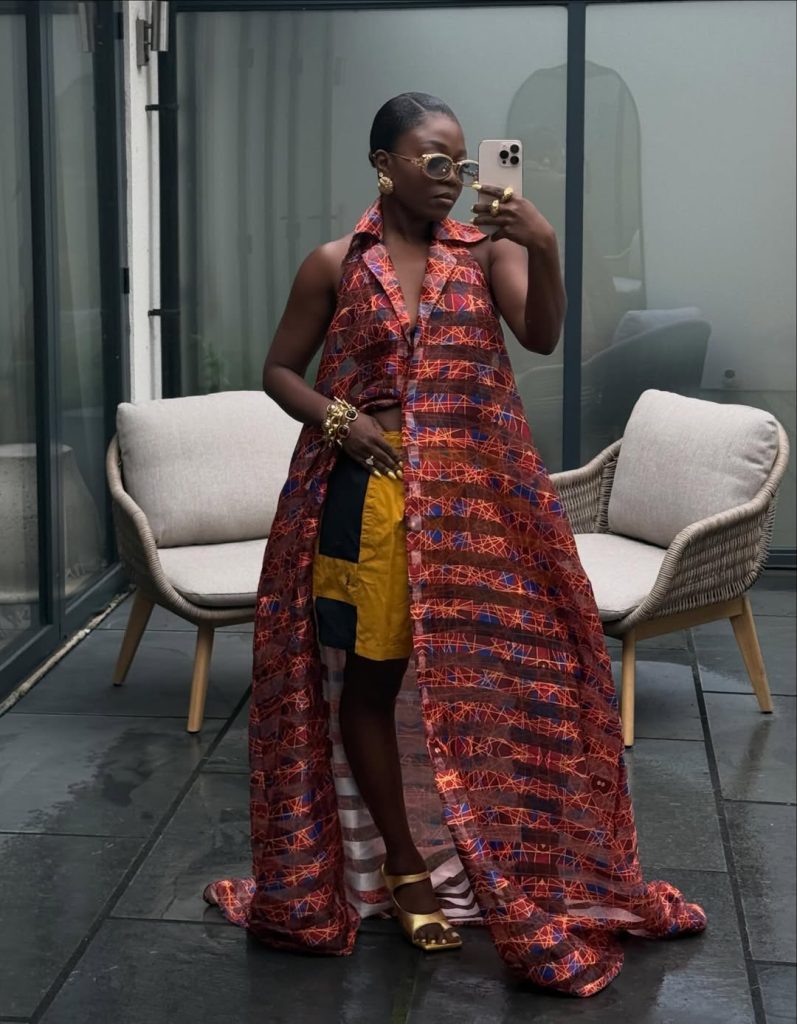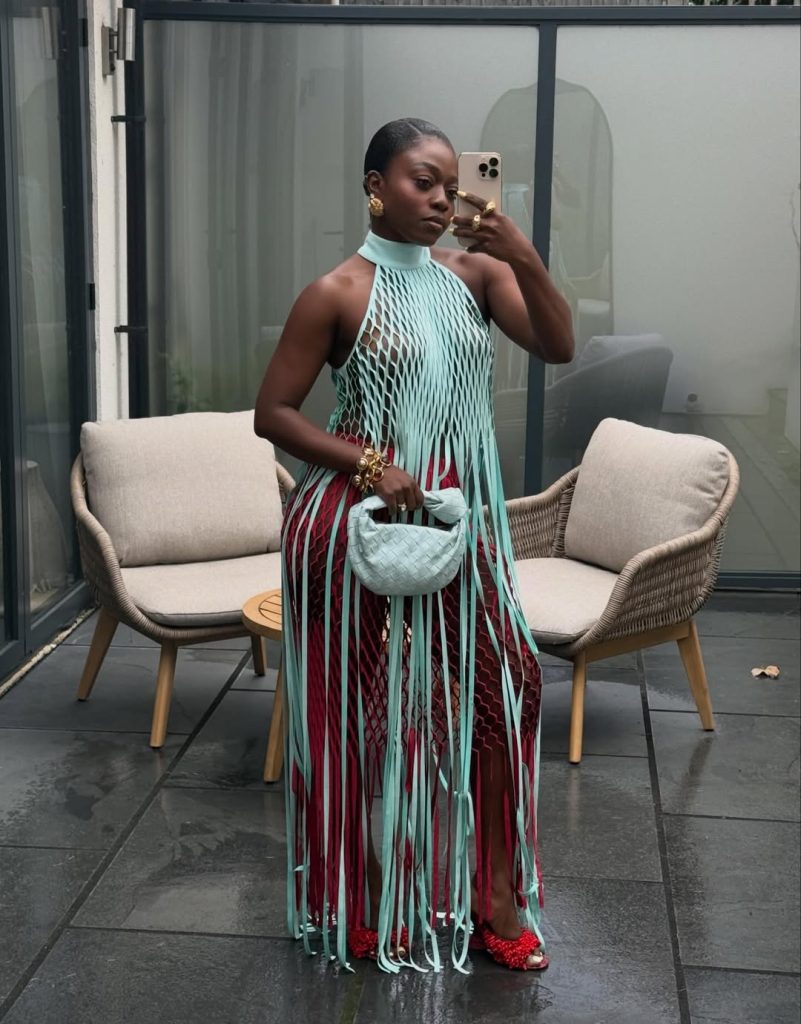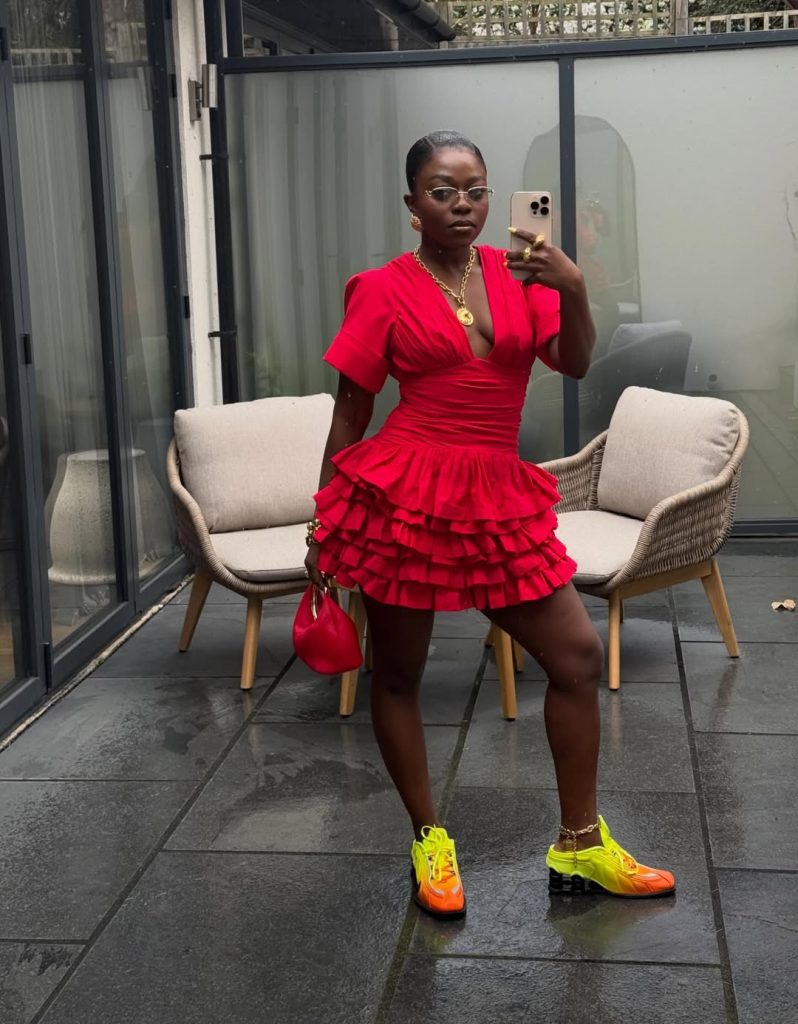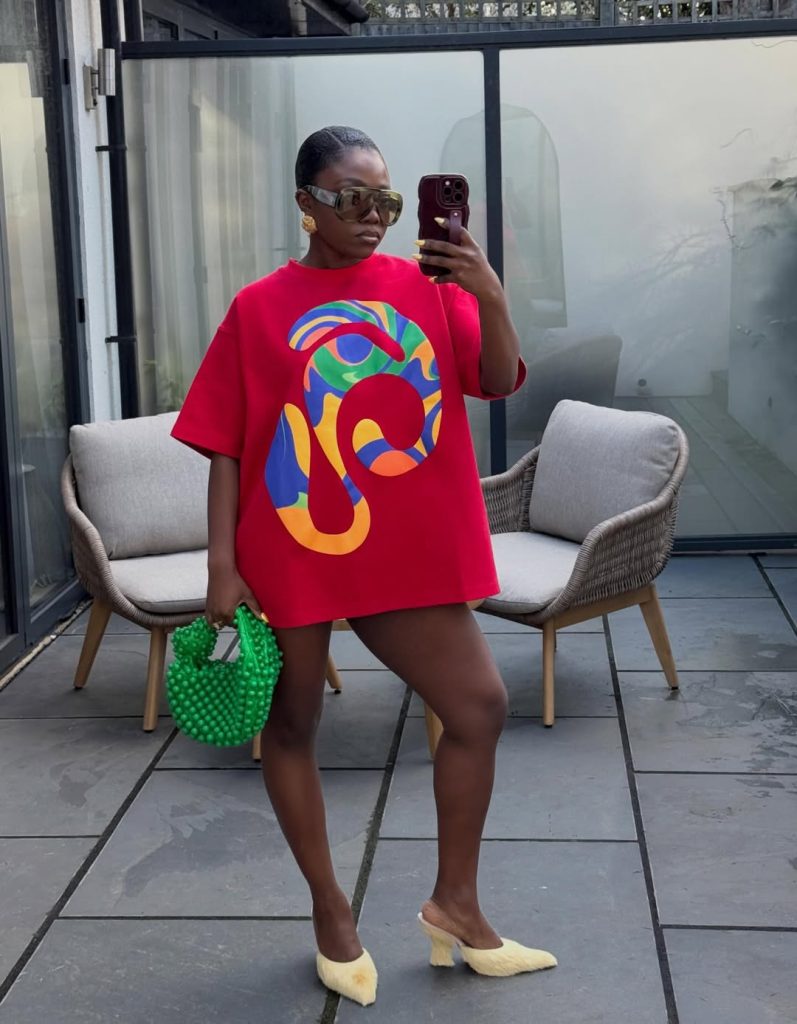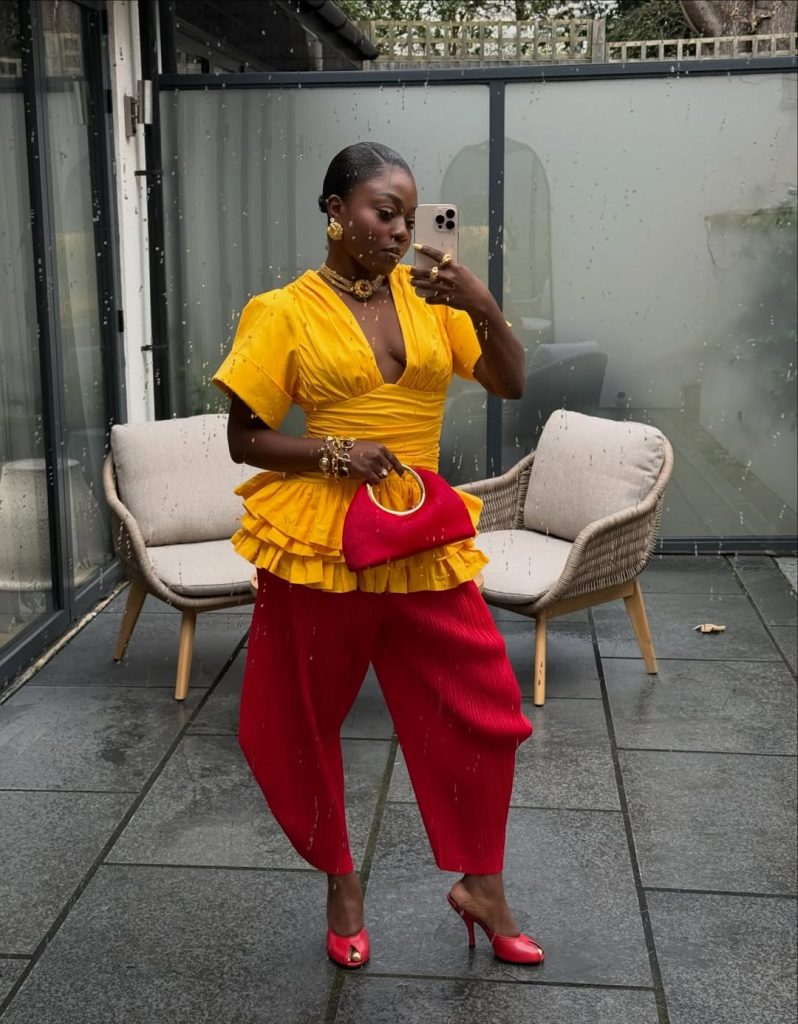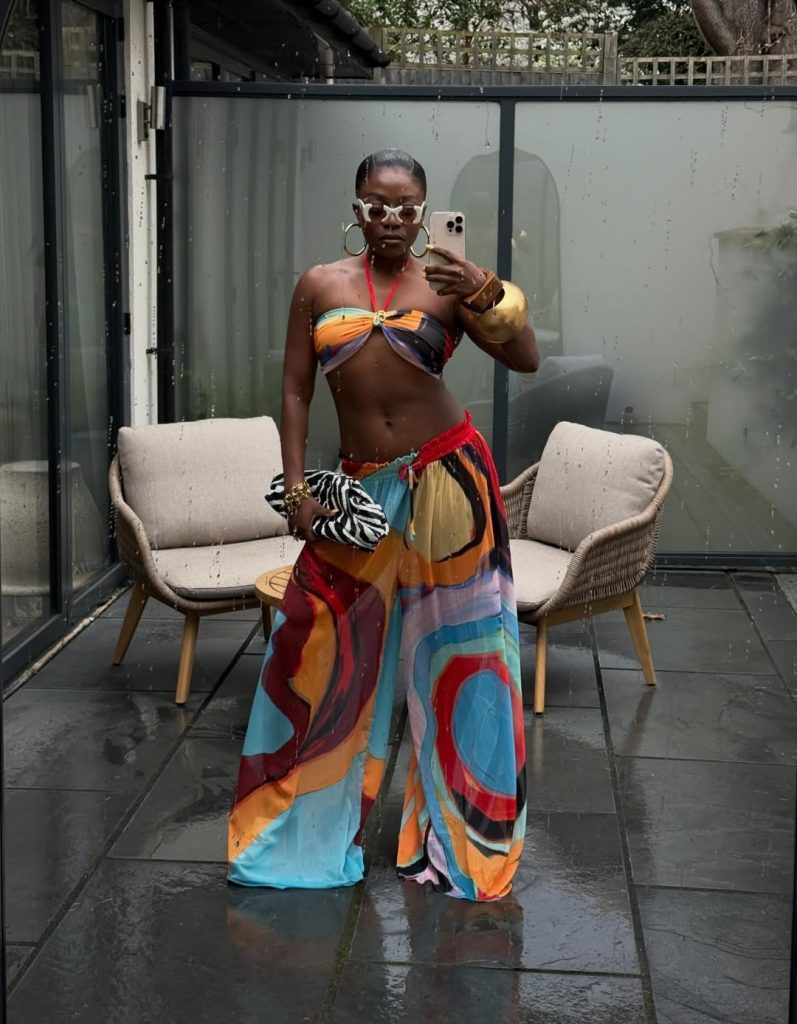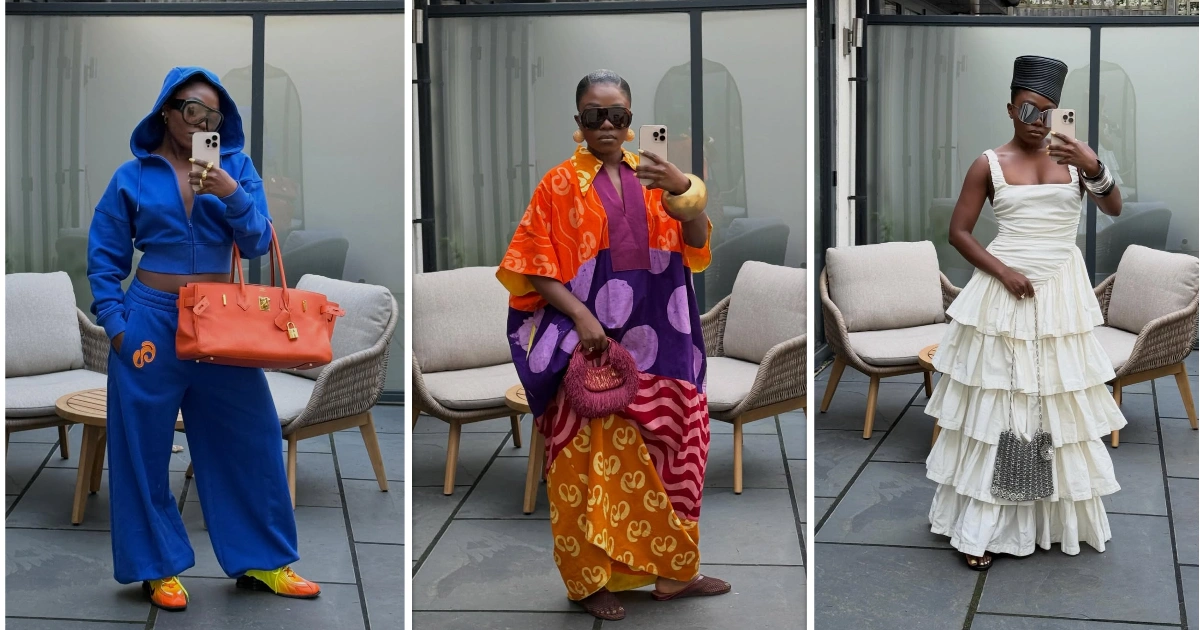
There is a particular discipline to dressing that Fisayo Longe has mastered: the understanding that an outfit is never truly complete until the accessories have spoken. In a series of mirror selfies captured on her London terrace, the Nigerian fashion entrepreneur and style authority demonstrates what it means to build a wardrobe where bags, jewelry, and footwear do not merely complement—they conclude.
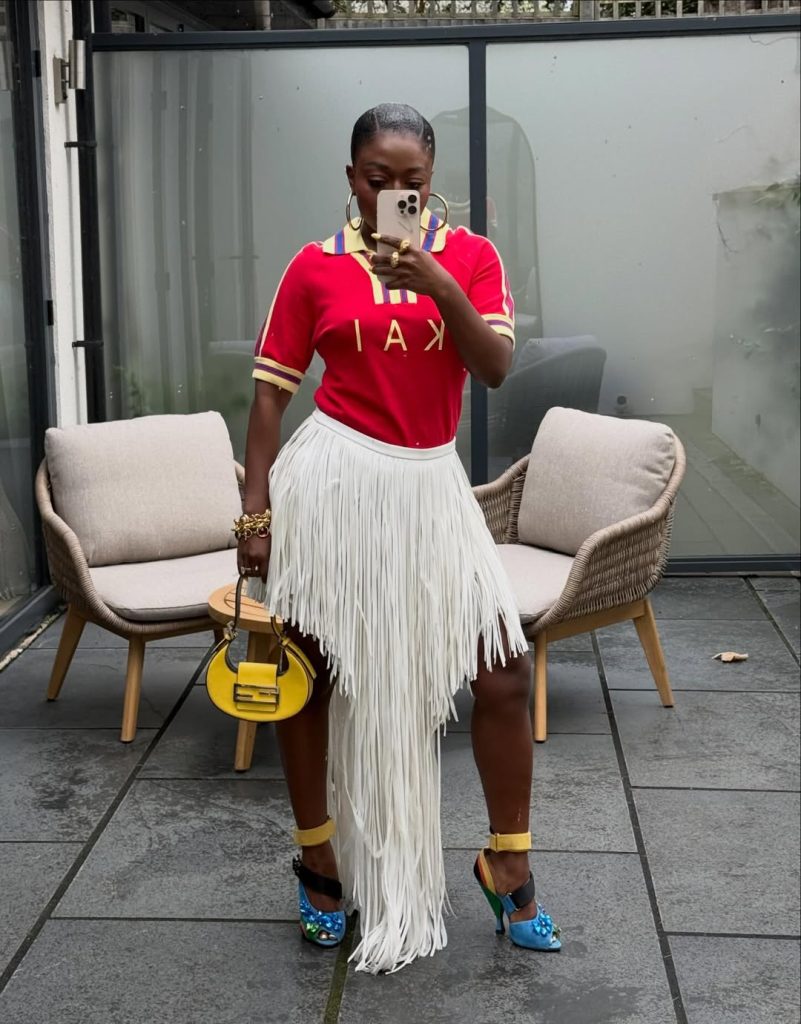
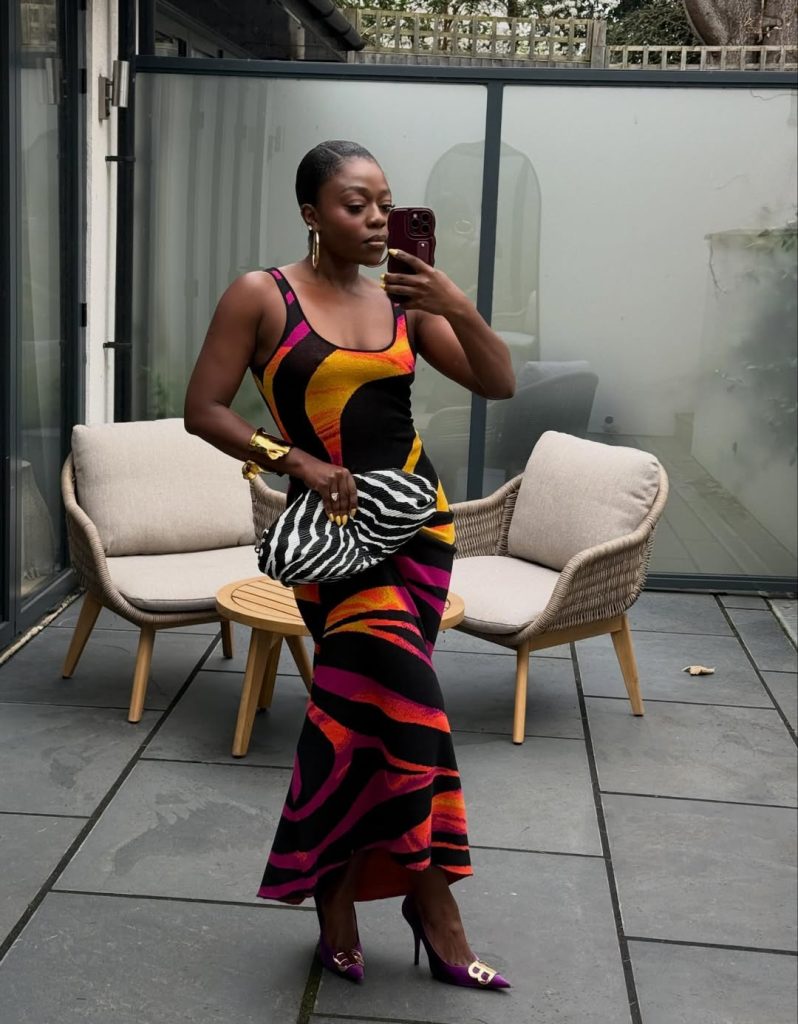
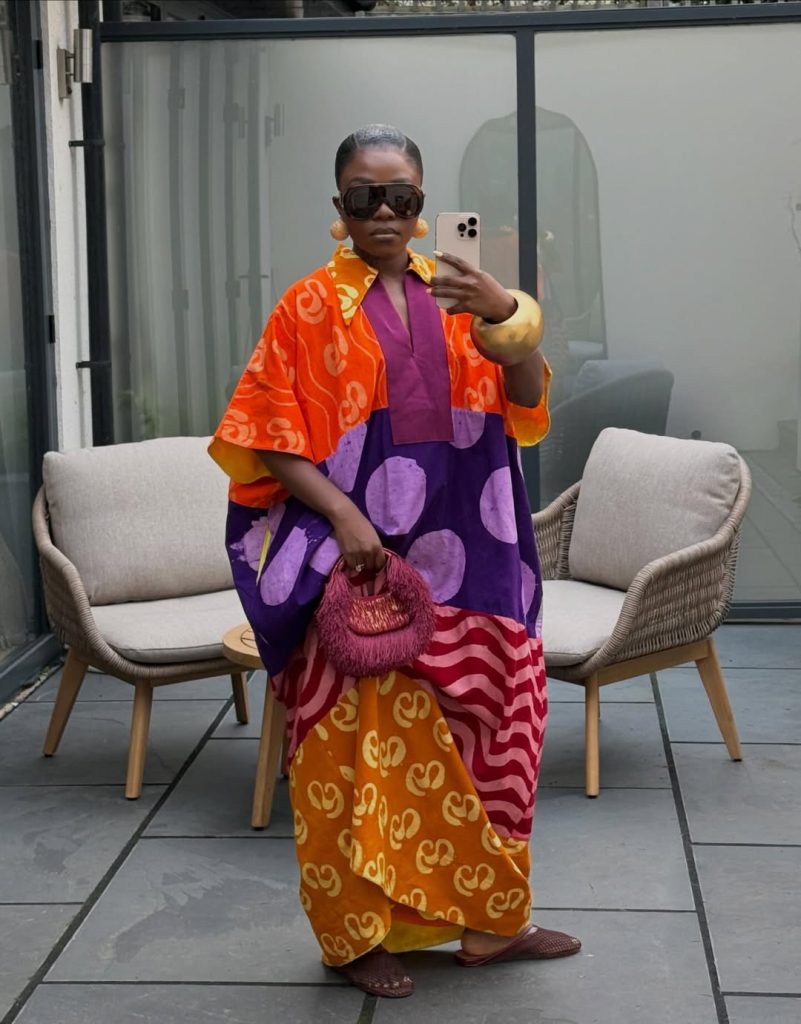
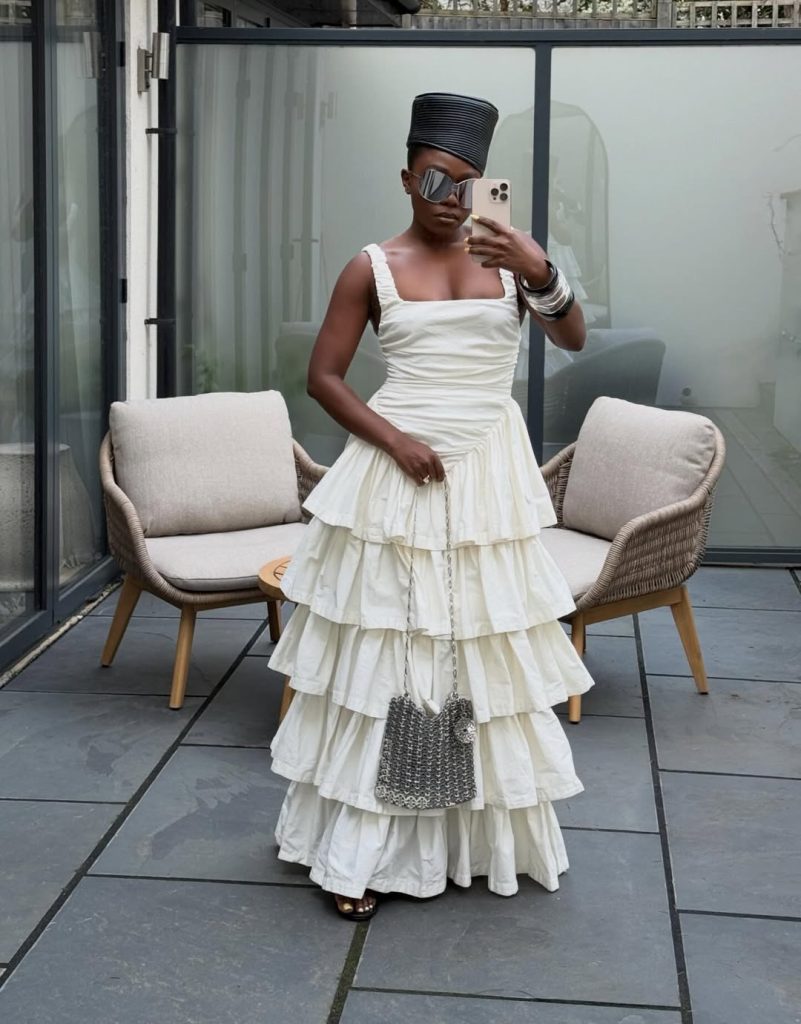
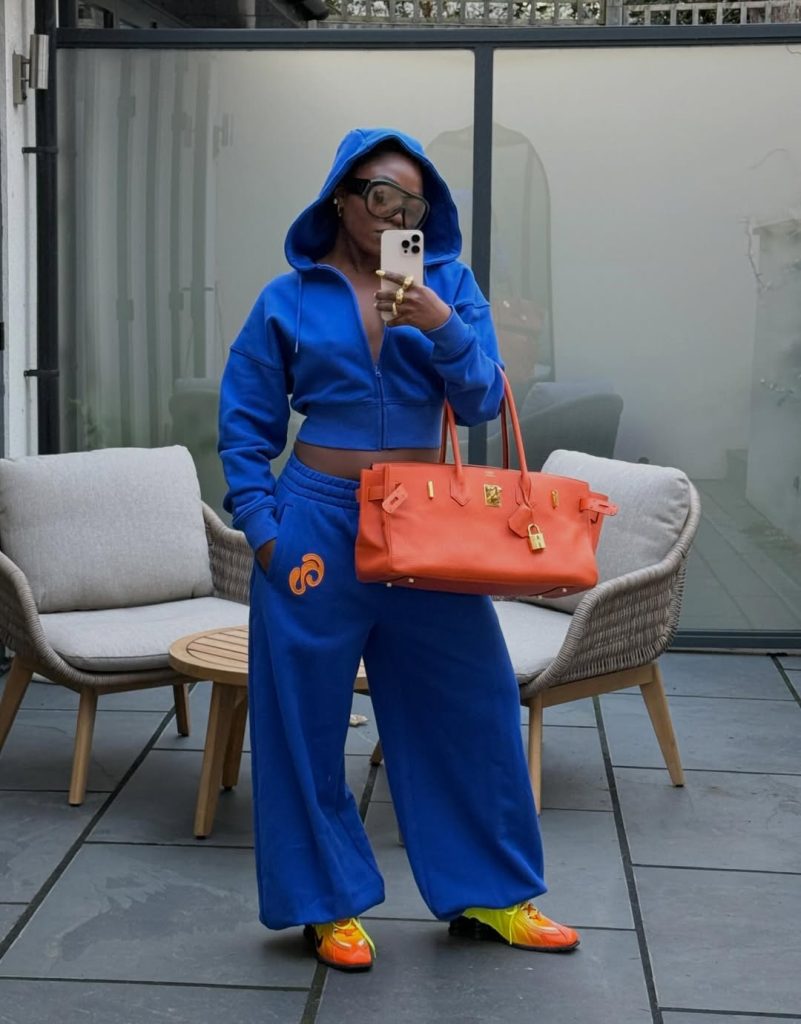
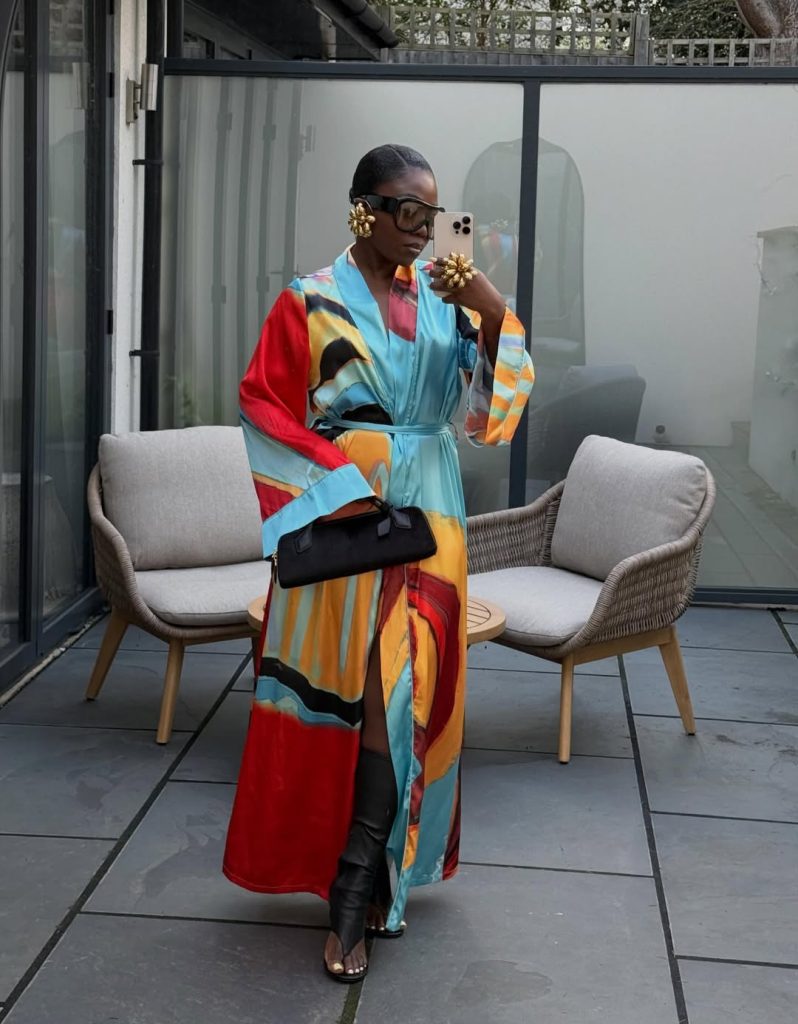
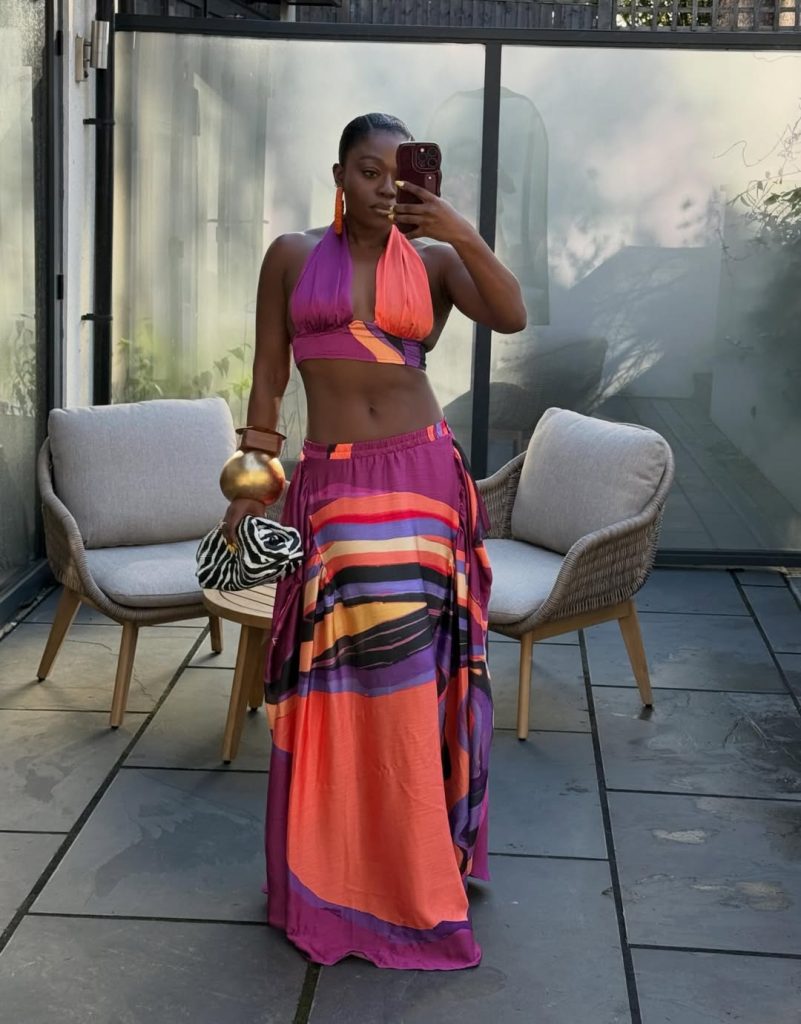
The bags arrive first, demanding their own taxonomy. A cognac crocodile Birkin with gold hardware appears in multiple frames, its structured silhouette and tonal warmth asserting itself as the ultimate status piece. It is not carried casually; it is presented, held at the hip or dangled from the forearm with the ease of someone for whom luxury is baseline rather than aspiration. In another moment, a copper sequined Fendi Baguette catches light like a disco ball, its chain strap and compact shape offering a playful counterweight to the maximalist coat layered over it. A mint-green woven Bottega Veneta Jodie bag introduces texture and softness, its knotted handle and pliable form contrasting with the architectural fringe of the dress it accompanies. A zebra-print clutch adds animal instinct to a bodycon moment, while a red top-handle bag with gold ring hardware punctuates a yellow-and-crimson ensemble with graphic precision. Each bag is chosen not for brand recognition alone but for its ability to dialogue with the outfit—to extend a color story, to introduce a new texture, to provide the exclamation point at the end of a sartorial sentence.
The jewelry operates with similar intentionality. Gold is the throughline, but its application varies dramatically. Sculptural dome earrings with ridged surfaces echo the texture of the Birkin’s hardware. Oversized floral rings in matte gold transform the hand into a bouquet, worn stacked across multiple fingers so that every gesture becomes performance. Chunky gold cuffs encircle wrists with the weight of armor, while delicate chains at the throat add whispered refinement where the neckline demands it. The scale is always considered: bold where the outfit is quiet, restrained where the print is loud.
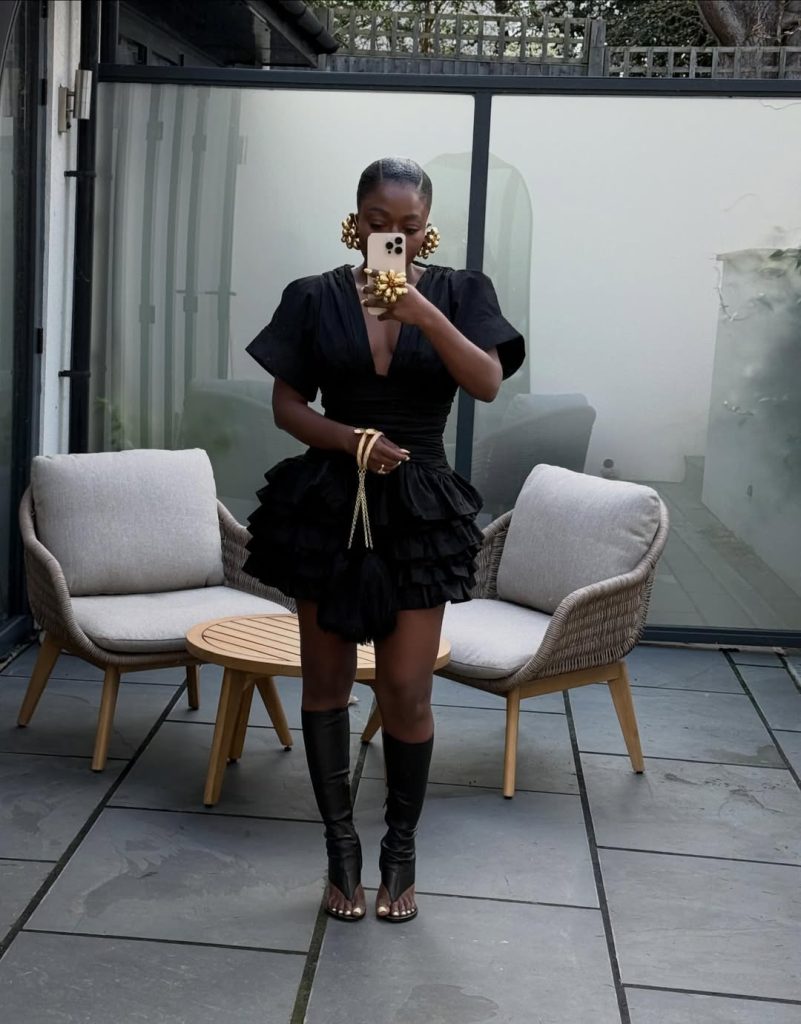
Footwear completes the narrative with unexpected choices. Neon and orange sneakers ground a cobalt tracksuit, their athletic energy transforming a luxury bag into streetwear punctuation. Metallic mules with sculptural heels elevate a white ruffled gown, their reflective surfaces catching the same light that plays across the silver chainmail bag. Knee-high leather boots with peep-toe detailing add dominion to a black ruffled mini, while yellow fur-trimmed mules introduce surrealist humor to an oversized graphic tee. Each shoe is a plot twist, a refusal to let the outfit settle into predictability.
What unites these disparate moments is Longe’s understanding of balance. She will pair a four-figure handbag with a tracksuit, a couture gown with sneakers, a vintage-inspired coat with a sequined evening bag. The rules are not broken; they are simply recognized as optional. Her accessories do not apologize for their presence or compete for attention—they know their role, their placement, their moment.
The setting reinforces the intimacy of this edit: the same two wicker chairs, the same glass doors, the same London light filtering through overcast skies. It is fashion as daily practice, as personal ritual, as the documentation of a mind that thinks in color, texture, and proportion. Fisayo Longe does not dress for occasions; she dresses for herself, and the accessories are how she signs her name.
The message arrives without announcement: The bag is not an afterthought. It is the thesis.
THE ACCESSORY EDIT