There is a particular confidence required to wear a floor-length faux fur coat in the humidity of Lagos, and Rema possesses it entirely. The coat—black, shaggy, deliberately excessive—falls from his shoulders with the dramatic sweep of a cape, transforming his frame into something monumental, architectural, impossible to ignore. It speaks the visual language of 1997, of Biggie and Diddy and the Bad Boy era’s unapologetic materialism, yet wears it with the ease of someone who understands that nostalgia becomes revolutionary when repurposed by the right hands.
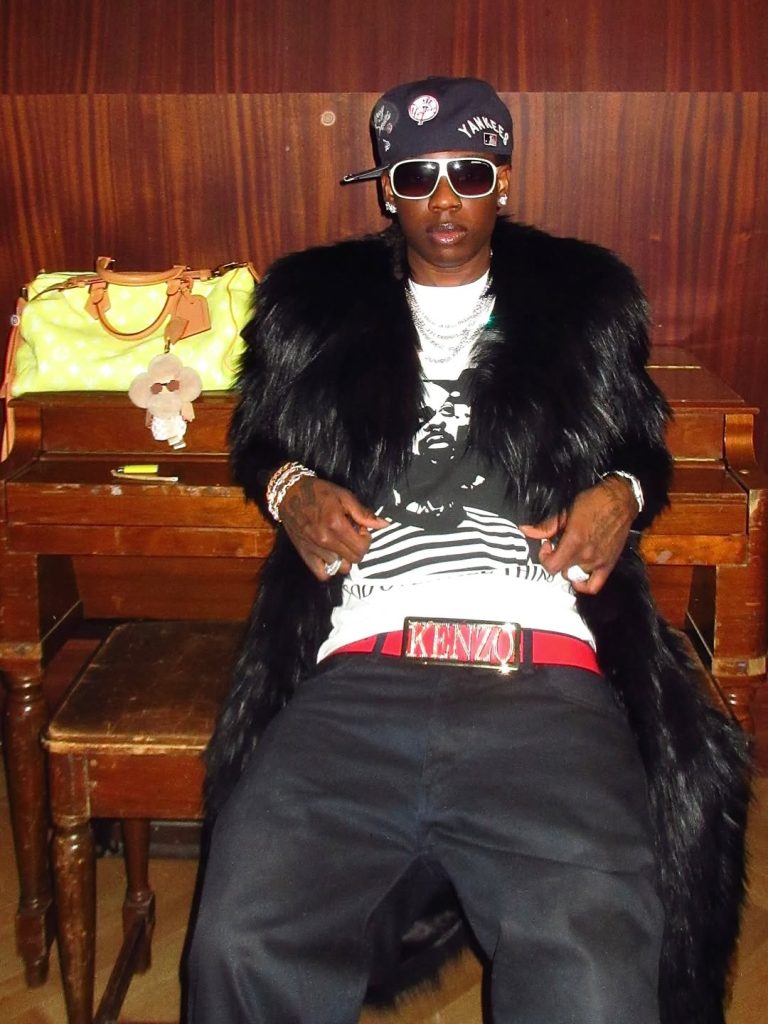
Beneath this outer armor, he constructs layers of reference and contradiction. A vintage-tinged graphic tee peeks through, featuring what appears to be the ghost of hip-hop past—some sampled portrait, some borrowed iconography—suggesting that Rema understands his position in a lineage, the young African artist absorbing American Black culture and returning it transformed. The silhouette is oversized, slouched, borrowed from skate culture’s rejection of tailoring yet executed with the grandeur of red-carpet intentionality.
READ MORE: Coachella 2026: The Year Afrobeats Seized the Desert
His accessories tell their own aggressive story. That citrine-yellow Louis Vuitton Keepall rests beside him like a supporting character, its acid monogram cutting through earth tones with the subtlety of a highlighter mark, its travel DNA repurposed for the perpetual motion of touring life. Wheat-colored Timberland boots—scuffed, lug-soled, authentically worn—ground the luxury in working-class mythology, transplanting New York winter essentialism to West African heat through sheer force of attitude. A Kenzo belt cinches the waist with Japanese-French formality, its red leather and gold logo buckle dividing the body, creating structure within the deliberate slouch. The Yankees cap, brim flat and stickers intact, completes the East Coast mythology, a Nigerian artist claiming American sports heritage as global cultural capital.
READ MORE: The Tailored Turn: Rema Steps Into His Power Era
The jewelry operates as syntax rather than decoration—chains layered with industrial intensity, bracelets stacked to create rhythm on his wrists, all catching light with the frequency of rap’s material obsession made audible in its silence. White-framed sunglasses, oversized and slightly retro, obscure while demanding attention, referencing the deliberate opacity of the truly famous. Even the cigarette, held with casual precision, adds the final touch of rebel affectation, the slight transgression that separates performers from civilians.
What emerges is not mere outfit but cultural positioning, a young man constructing a persona that travels between Lagos and London, between Afrobeats and trap, between heritage and futurism. In an era of male pop star minimalism, Rema’s maximalist individualism feels radical—he is not afraid of being seen, of demanding attention, of wearing the fur coat when no one else would dare. This is the confidence of an artist who understands that image is instrument, that every choice communicates ambition, that the future of global style might just look like a carefully curated past.