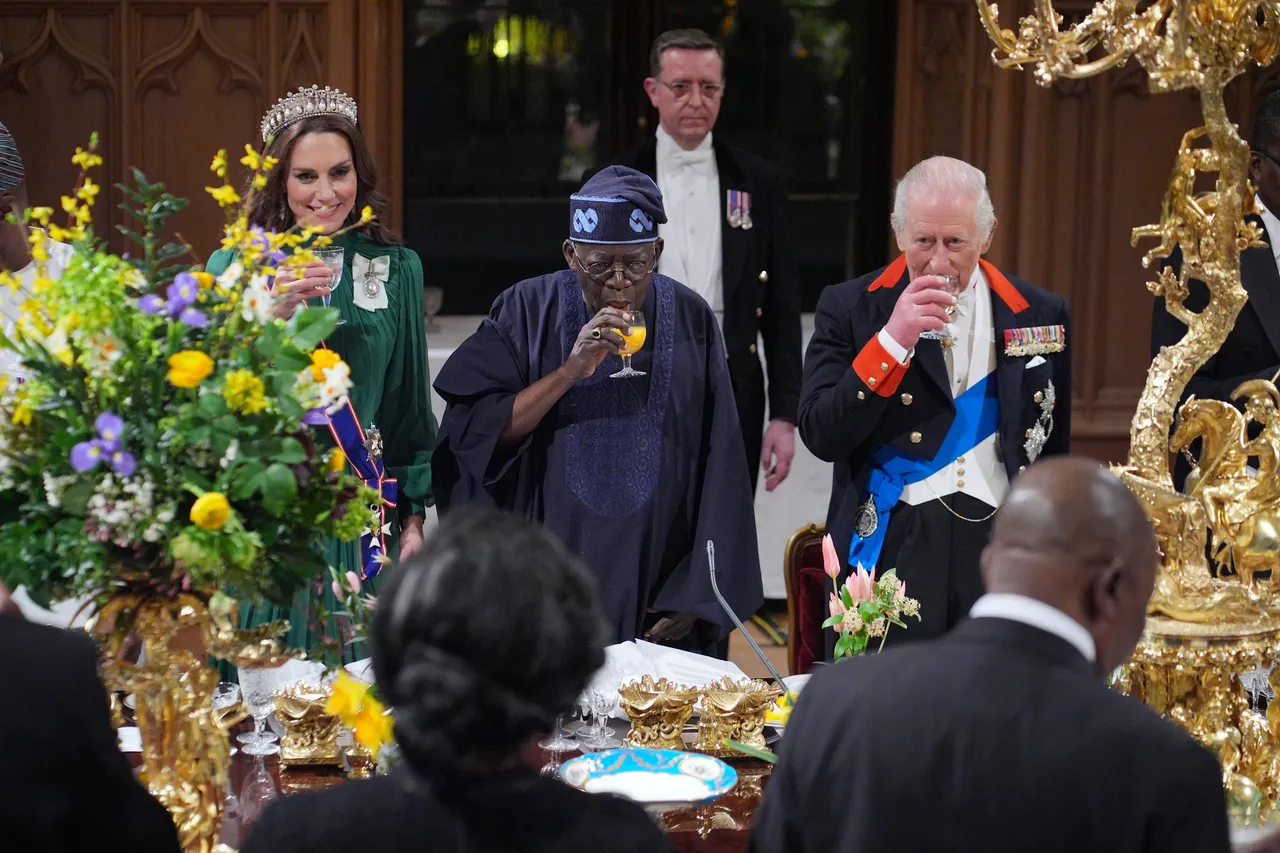
When Catherine, Princess of Wales stepped into the grand halls of Windsor Castle for the Nigerian state banquet, it wasn’t just another moment of royal pageantry—it felt personal. For many Nigerians watching from afar, her choice of colour alone carried meaning far beyond fashion.
Draped in a flowing forest-green gown, the Princess paid what can only be read as a deliberate homage to Nigeria—a nation whose identity is deeply tied to that same rich, symbolic hue. It was a quiet but powerful gesture, one that signalled respect, awareness, and a growing dialogue between British royalty and Nigerian culture.
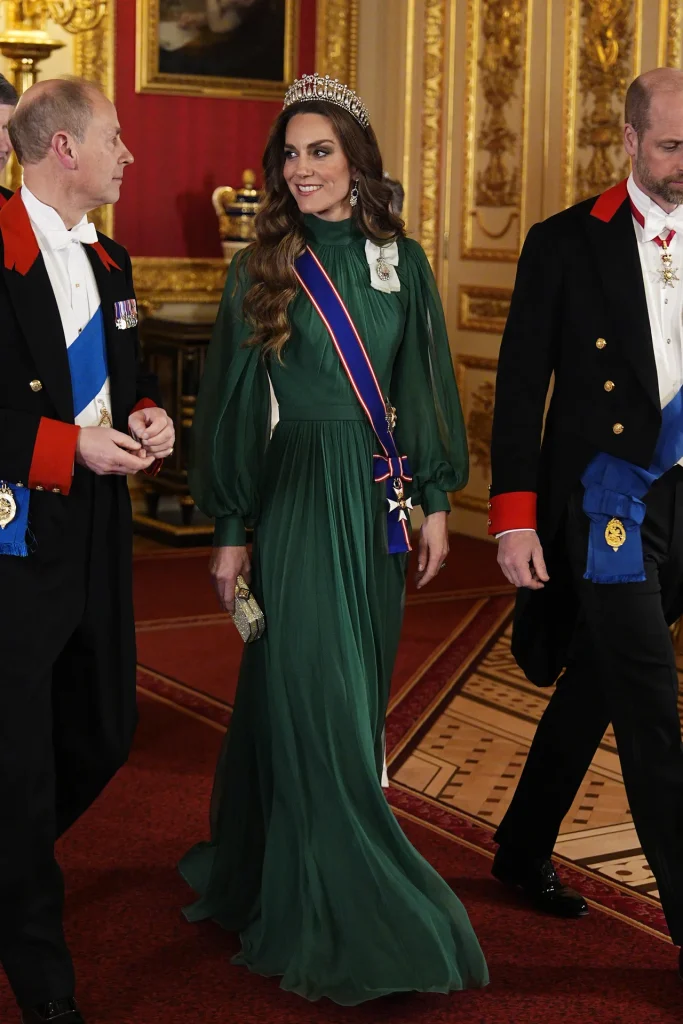
But Kate’s look didn’t stop at colour symbolism. Crowned atop her head was the storied Queen Mary’s Lover’s Knot Tiara, a piece steeped in royal history and emotional resonance. Once beloved by Princess Diana, the tiara carries with it a legacy of elegance tinged with nostalgia. Its cascade of diamonds and pearls shimmered under the chandeliers—timeless, regal, and unmistakably significant.
For Nigerians, however, the moment felt especially layered. This wasn’t just about heritage—it was about acknowledgment. Earlier in the day, the Princess had also stepped out in a design by Tolu Coker, a rising talent with roots that bridge both nations. In doing so, she subtly spotlighted Nigerian creativity on a global stage—something that resonates deeply in an era where African fashion is finally receiving its due recognition.
Accessories further anchored the look in royal tradition: a delicate clutch by Jenny Packham and heirloom sapphire earrings once owned by Queen Elizabeth II. Yet even among these historic pieces, it was the green gown that lingered in the imagination—soft, fluid, and culturally intentional.
From a Nigerian perspective, this was more than diplomacy dressed in couture. It was fashion used as a bridge—connecting continents, histories, and identities in a single, carefully curated appearance. In a world where representation matters more than ever, Kate’s sartorial choices didn’t just complement the occasion—they honored it.